Your Privacy is Important to us!
We use cookies to enhance your browsing experience, serve personalized ads or content, and analyze our traffic. By clicking "Accept All", you consent use of cookies.

In the heart of Himachal Pradesh, the Jwala Devi Temple has long been a magnet for visitors from all corners of life. That's because of a natural wonder that has left both believers and scientists scratching their heads for centuries. Those eternal flames have been burning without any apparent source of fuel for as long as anyone can remember. Located in Kangra district, this temple is dedicated to Goddess Jwala and the embodiment of divine energy.
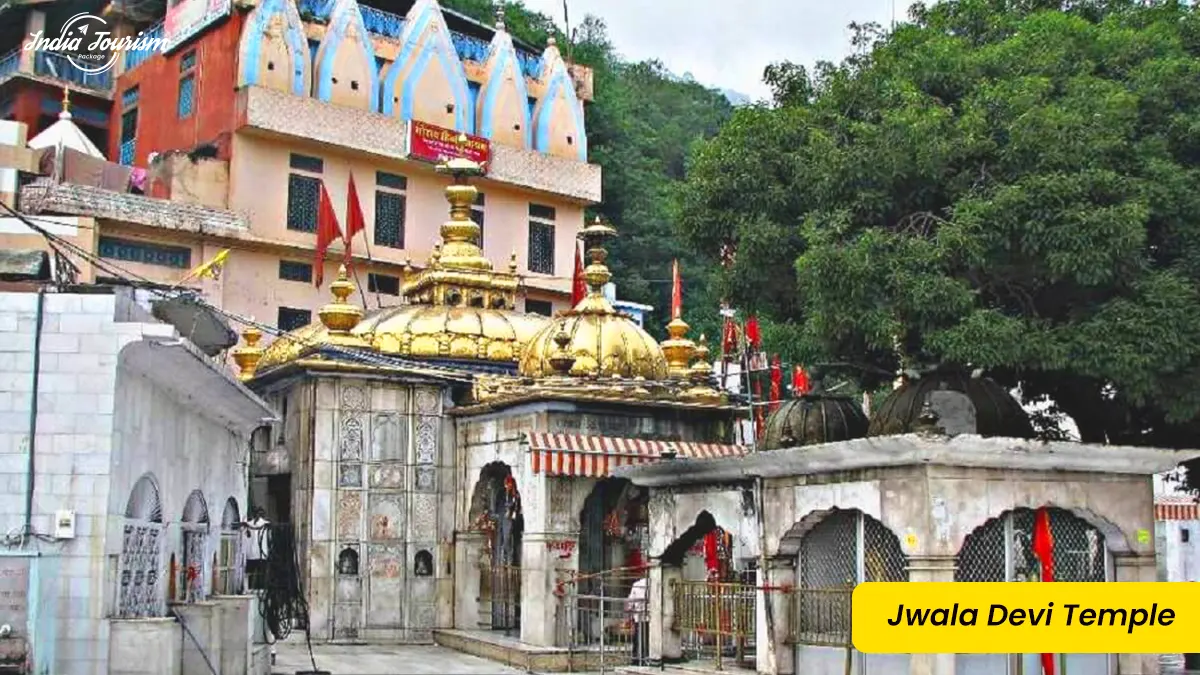
The legend of Jwala Devi Temple in Himachal Pradesh is based on Hindu mythology. According to ancient texts, when Goddess Sati self-immolated in grief, Lord Vishnu cut her body into 51 parts to calm Lord Shiva’s anger. These body parts fell at various places in the Indian subcontinent, and these places are now known as Shakti Peethas. The tongue of Goddess Sati is believed to have fallen at this very place, and the flames are her presence. As you step inside, you're entering a place of worship as well as tapping into centuries of mystery, devotion and the kind of energy that draws people in. Let's understand what makes this temple so unique, and what is the significance of this temple?
Scientists say the flames at Jwala Devi Mandir are due to natural gas emissions from the earth’s crust. But for devotees, these are no less than a divine miracle. The temple has multiple openings in the rock from which blue and yellow flames emerge. These are worshipped as different forms of the goddess, and each flame has been named.
Despite attempts by Mughal emperor Akbar and later rulers to douse these flames still they continue to burn with the same intensity. Many have tried to study this phenomenon, but no concrete explanation has been found for their uninterrupted existence.
The temple has a total of nine different flames, and each represents a different form of the goddess: Maha Kali, Annapurna Devi, Chandi Mata, Hinglaj, Vindhyavasini, Maha Laxmi, Maha Saraswati, Ambika and Anjana.
People believe that by witnessing these eternal flames, their wishes get fulfilled and life obstacles will be removed. The priest of the temple performs daily rituals to keep the flames sacred.
When you visit Jwala Devi Temple in Himachal Pradesh, timing really makes all the difference. The temple follows a pretty standard schedule for devotees.
Throughout the day the temple comes alive with a series of aartis and rituals.
That is when the temple is at its busiest during the Navratri, when thousands of devotees flock in to seek the goddess's blessings. And that's when you can really feel the energy and devotion in the air. Special celebrations and grand rituals during Navratri make that time truly unforgettable.
Reaching the Jwala Devi Temple in Himachal Pradesh is a journey that will leave you in awe of the region's majestic beauty. Whether you're flying in, hopping on a train or driving in, the temple is connected to the rest of India in a way that makes it accessible to both devotees and tourists. Here's how to get there.
Gaggal Airport, also known as Kangra Airport, is your nearest airport to Jwala Devi Mandir. That's about 50 kilometres away. Flights from Delhi and Chandigarh are frequent. Once you land, you can take a taxi or a private vehicle to the temple. The drive usually takes anywhere from an hour to 1.5 hours, depending on the traffic. The roads are scenic, so you might not even mind the wait.
Travelling by train is a good option. The nearest railway stations to Jwala Devi Temple are Pathankot and Kangra, both are well connected to all over the country. You can reach from Delhi to Jwala Devi, Himachal by train to the railway stations mentioned below.
Travelling by road to Jwala Devi Temple is a great option for those who like the freedom to create their own itinerary. You can choose from buses and taxis that connect major cities like Delhi, Chandigarh, Shimla and Dharamshala. The road network is well-maintained and the views of the mountains along the way are just as beautiful as the temple. Driving itself can be a pretty pleasant experience.
You can take a luxury bus, hire a private taxi or car or even drive yourself if you enjoy the road trip experience. Most buses run overnight or during the day, whichever suits you best. Some people love the overnight journeys for the scenery you see under the stars.
If you want a more comfortable and personal experience, then driving in your own vehicle or taking a taxi or car on rent is a great way to go. With your own vehicle, you can stop at all the scenic points you want to along the way. The roads are well-maintained, but they do get a bit winding as you approach the temple. That winding road can actually be quite peaceful. And you'll have plenty of opportunities to take in the natural beauty of the region.
Accessibility Tips
Weather Conditions: Weather conditions in Himachal Pradesh can change dramatically with the seasons. Winters can be pretty chilly, and snowfall can make those roads very slippery indeed. That is why it is always a good idea to check the weather forecast before you plan your trip, especially during the winter months.
Local Transport: Local buses, taxis, and private vehicles are all readily available near the temple. If you do want to visit the nearby attractions, car rental services are a good option for a comfortable journey.
Travel in Groups: When you are travelling in a group, hiring a tempo traveller on rent or a bus can be a cost-effective way to get around. We offer guided tours that include transportation to the temple. Those tours can be a convenient option for visitors who want to make the most of their trip.
| Route | Distance in Km |
|---|---|
| Pathankot to Jwala Devi Distance | 110 Km |
| Naina Devi to Jwala Devi Distance | 125 Km |
| Katra to Jwala Devi Distance | 288 Km |
| Chandigarh to Jwala Devi Distance | 189 Km |
| Dharamshala to Jwala Devi Distance | 53 Km |
| Kangra to Jwala Devi Distance | 34 Km |
| Vaishno Devi to Jwala Devi Distance | 298 Km |
| Jammu to Jwala Devi Distance | 243 Km |
| Amritsar to Jwala Devi Distance | 181 Km |
| Shimla to Jwala Devi Distance | 3 Km |
| McLeod Ganj to Jwala Devi Distance | 62 Km |
| Una to Jwala Devi Distance | 68 Km |
The best time to visit Jwala Devi Temple, Himachal Pradesh, is from March to June and September to November. During these months, Jwala Devi's temperature is pleasant and travel is comfortable. The temple is open throughout the year, but winters can be very cold and the temperature goes down to 5°C.
Summer is mild with temperatures ranging from 20°C to 30°C. Navratri, celebrated twice a year in March-April (Chaitra Navratri) and September-October (Sharad Navratri) is the best time to visit. During Navratri, thousands of devotees come to see the grand celebrations. If you want to avoid the crowd, you can visit during off-season and you will be able to see the temple in peace and still enjoy the spiritual atmosphere.
After your spiritual visit to Jwala Devi Temple, Himachal Pradesh, there are several other attractions nearby. You can make a plan accordingly to enjoy the serenity of the Hill station and the religious charm.
One of the oldest and magnificent forts in India stands as a symbol of the region’s grandeur, The fort offers an impressive view of the valley below. The fort's history dates back to the 4th century, and it is an important historical site. The view from the fort offers a glimpse into the surrounding mountains, rivers, and valleys.
The Masrur Temples, located about 40 kilometres from Jwala Devi Temple, are an architectural marvel carved out of rock. These temples are believed to date back to the 8th century, and their intricate carvings are a testament to the skill of ancient architects. They are often referred to as the "Kangra's Kailash" due to their resemblance to the famous Kailash Temple in Ellora.
An absolutely beautiful place just 55 km from Jwala Devi, it is preferred to plan a Dharamshala Dalhousie Trip with family to enhance the trip experience. It is a lovely hill station and an ideal place to unwind after your visit to the temple. Bhagsunath Temple, the Tsuglagkhang Complex, Dharamshala Cricket Stadium are some of the prominent places to visit here.
When you are on a pilgrimage trip to Himachal, plan your itinerary accordingly to cover famous places such as Baijnath Temple- dedicated to Lord Shiva and highly revered. You can also visit 5 Devi Temples to complete a yatra from Jwala Devi.
One of the most tranquil and serene places is perfect for picnics, family outings after darshan at the Temple. Enjoy the cool view of the Dhauladhar Mountain range and soak in the beauty of nature.
The stairs up to Jwala Devi Mandir around 100 to 150, depending on the route you take are a manageable climb for most visitors, including elderly pilgrims. That's thanks to the relatively gentle slope.
The best months to visit Jwala Devi Temple in Himachal Pradesh are March to June and September to November. If you want to experience the grand Navratri celebrations, you should consider visiting in either March or April (Chaitra Navratri) or September or October (Sharad Navratri).
The nearest train station is Pathankot and is about 123 km away. Trains run regularly from Delhi to Pathankot, and from there you can grab a taxi or bus to the temple. If you prefer to fly then the nearest airport is Gaggal Airport (Kangra Airport) and is just 50 km away. Regular flights from Delhi land there, and taxis are available. You can also take a direct bus from Delhi to Kangra or Jawalamukhi, and then local transport will take you the rest of the way.
According to Hindu mythology, Sati's tongue is said to have fallen at Jwala Devi Mandir, one of the 51 Shakti Peethas. That's why you'll see the temple's eternal flames. They symbolise the divine energy of the goddess Jwala Mata.
Jwala Devi Temple is one of those places that draws devotees from all over India. They come to seek the blessings of Jwala Mata, who is worshipped in the form of those eternal flames. The temple holds great religious significance because it's believed to be the place where Goddess Sati's tongue fell.




B-115, First Floor, Rg Complex, Near HDFC Bank, Paharganj, Delhi-110055